
Building From Afar
How to buy a home in Cartagena from abroad, step by step
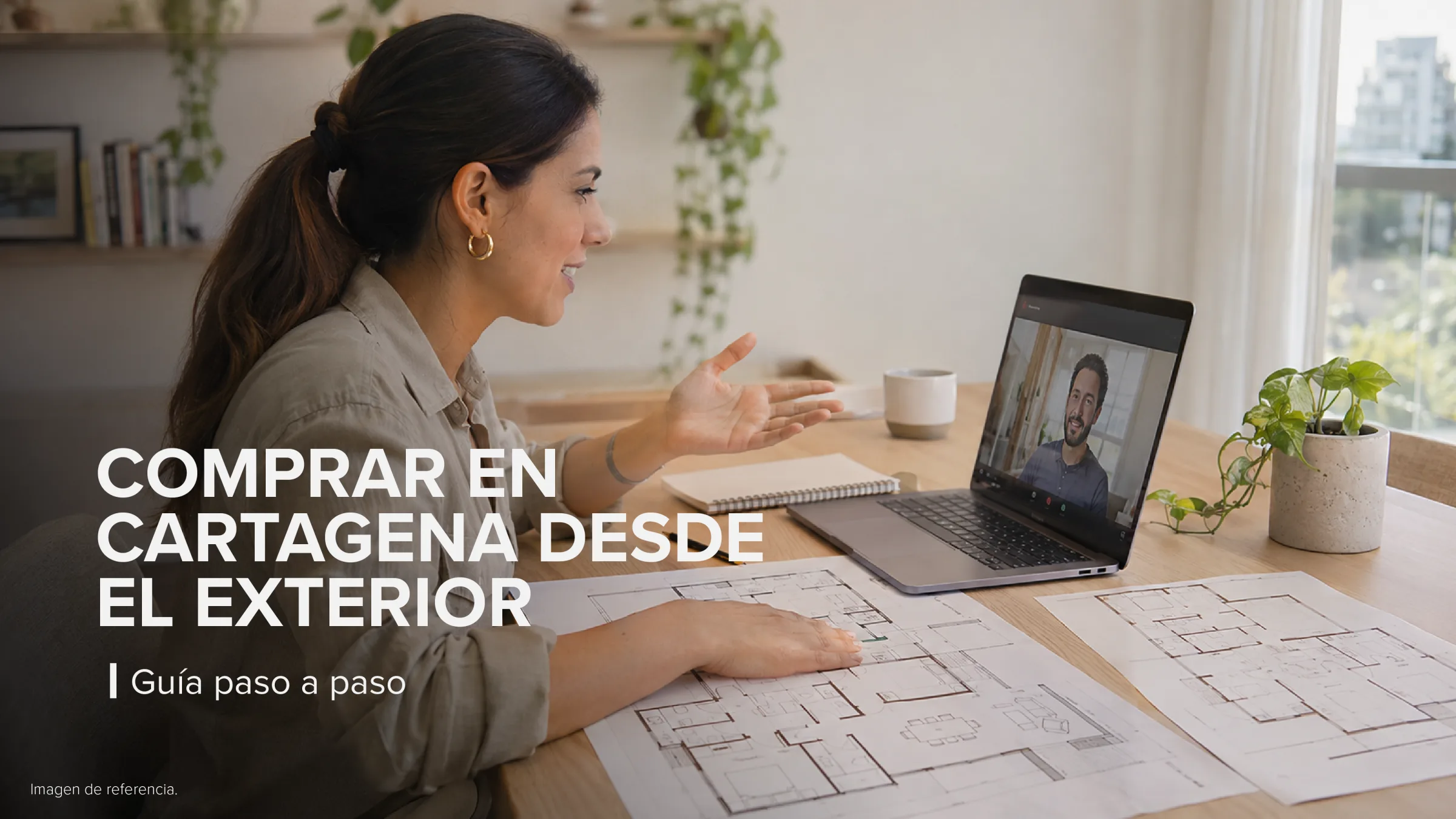
Your life may be in another city or another country, and Cartagena can still be the place you want to come back to. Buying from a distance is possible: what changes is the order of the process and the number of questions worth answering from the start.
More and more Colombians abroad and foreigners are buying homes in the country. According to Camacol, sales of new homes to non-residents rose from 8.8% in April 2025 to 12.1% in November 2025: 10.0% to Colombians abroad and 2.1% to foreigners. And remittances reached USD 13.098 billion in 2025, a record according to Banco de la República.
This guide walks through the most common steps. Legal, foreign exchange and tax details depend on each case and must be confirmed with advisors.
Step 1. Decide what you want the apartment for
Living there, coming back often, building wealth or a mix of these are different goals, and they lead to different choices. With a clear goal, the rest of the process gets simpler.
Step 2. Get to know the project from a distance
The building’s virtual model and a virtual tour (a video call with an advisor) let you see floor plans, construction progress and surroundings without traveling. Ask for dated progress photos and a location map.
Step 3. Review the documents
Before reserving, ask for the project’s documented information: terms of sale, payment plan, condominium bylaws and who backs the project. It is the equivalent of walking through the sales gallery.
Step 4. Reserve the unit
The reservation is the first formal commitment. Understand what it includes, what is deducted from the down payment and which conditions apply. At Ítaca, the reservation and the installments are deposited into a trust account (encargo fiduciario) in your name at Alianza Fiduciaria; the COP 10,000,000 reservation is deducted from the 35% down payment, and the remaining 65% is paid at delivery, with a mortgage loan or your own funds.
Step 5. Decide how you will sign
You can sign in person or give a power of attorney to someone you trust in Colombia. If you sign the power of attorney abroad, it usually requires formalities such as notarization or an apostille, depending on the country. Ask at the nearest Colombian consulate. At Ítaca, the onboarding and reservation documents are printed, signed and sent by WhatsApp or email.
Step 6. Arrange the currency transfer
At Ítaca, payments from abroad are wired directly to your trust account at Alianza Fiduciaria, and the currency is converted through Alianza Valores. For foreign exchange rules, residence counts, not nationality: a Colombian who lives outside the country and sends money from abroad is treated as a non-resident, just like a foreigner. A non-resident’s purchase of real estate in Colombia can be registered as foreign capital investment. The funds are channeled through a bank or foreign exchange intermediary, which completes the exchange declaration with the minimum data required by Banco de la República’s External Regulatory Circular DCIP-83. Keep every record: it will help you later, even if one day you sell and want to repatriate the money.
Step 7. Review your financing options
Some lenders offer options for Colombians abroad; terms depend on each lender and on your case. Request an informational assessment before deciding. If you finance in Colombia, rates in October 2026 range between 11.8% and 17.7% effective annual, depending on the lender, and they change every week.
Step 8. Deed and registration
At the end of the process, the deed is signed and the property is registered in your name. Ask in advance which closing and registration costs apply and who covers them. In 2026, for example, notary fees on a sale are COP 30,900 plus 3 per thousand on the amount above COP 259,300, plus VAT, and by custom they are split between buyer and seller. Each charge is detailed in our guide on comparing housing projects beyond the price per square meter.
Step 9. Delivery and life after buying
Decide who will receive the apartment, how the HOA fees will be paid and who will represent you while you are away.
Questions worth answering from the start
- Which documents do I need, and where do I process them from my country?
- How do I sign if I cannot travel?
- How are transfers documented, and which records should I keep?
- What are the tax implications in my country and in Colombia? Consult a tax advisor.
- Who looks after me throughout the process, and how is the follow-up handled?
Distance does not have to take away your control. Having an assigned advisor and clear documents keeps it.
Frequently asked questions
Can I buy an apartment in Colombia while living abroad?
Yes. The process includes a virtual tour, document review, reservation, signing (in person or with a power of attorney), currency transfer and closing. At Ítaca, payments go into a trust account in your name at Alianza Fiduciaria. Conditions are validated case by case, and the documents differ depending on whether you are a Colombian abroad or a foreigner.
Do I have to register the purchase with Banco de la República?
A non-resident’s investment in real estate can be registered as foreign capital investment, through the exchange declaration completed by the bank you wire through. Confirm it with a legal advisor.
What happens to the money when I sell?
The registered investment can be canceled and the proceeds sent back through the foreign exchange market. Keep the records of the purchase.
Sources
- Banco de la República: Foreign investment in Colombia and Colombian investment abroad; External Regulatory Circular DCIP-83 (Sep 12, 2023 and amendments); opinion JDS-19411.
- Camacol: Datos que construyen No. 24 (Dec 9, 2025) and Economic Report No. 121.
- Banco de la República, 2025 remittances, cited by Migración Colombia (Feb 17, 2026) and Forbes Colombia (Jan 26, 2026).
- Superfinanciera, housing loan rates (2026).
- Superintendencia de Notariado y Registro: Resolution 000964-6 of 2026.